Oorlog tussen Rusland en Oekraïne (2022-...)

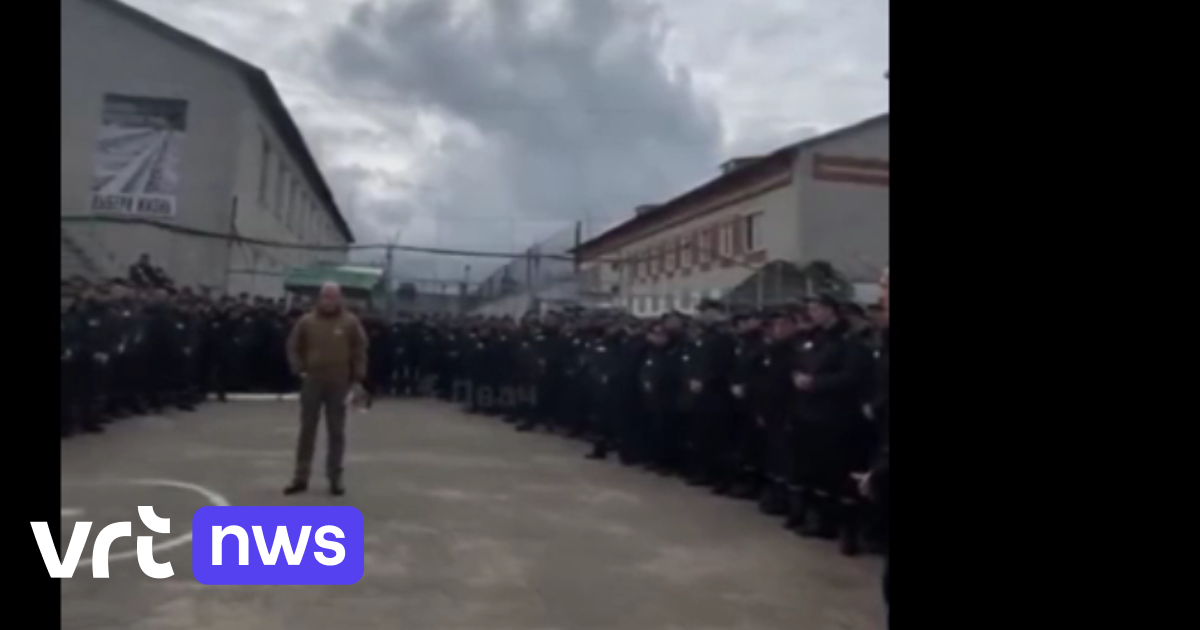
Hoe werkt dat eigenlijk met die gevangenen die plots soldaat worden? Is dat dan een apart batallion? Wie voert dat aan? Dat is toch onbegonnen werk om zo een zootje ongeregeld in het gareel te houden. Hoe moet die sfeer daar onderling zijn.
 
WarMonitorUA geeft aan dat er vandaag opnieuw 4 Russische gevechtsvliegtuigen zijn neergehaald (3 SU-24 - 1SU-25)

Ok, de kerk heeft een go gegeven!
Tijd voor de Holy Grenade ! Maar dan nu tov de Russische Beer

And the Lord spake, saying, 'First shalt thou take out the Holy Pin. Then shalt thou count to three, no more, no less. Three shall be the number thou shalt count, and the number of the counting shall be three. Four shalt thou not count, neither count thou two, excepting that thou then proceed to three. Five is right out. Once the number three, being the third number, be reached, then lobbest thou thy Holy Hand Grenade of Antioch towards thy foe,
 
Je houdt het niet voor mogelijk:
Munitie kopen van Tatjikistan?


Criminelen worden nu al ingezet, soort van squid game voorstel. Vecht zes maanden lang in Oekraïne en uw straf wordt kwijtgescholden.
Het opvallendste voor mij is dat ze dubbel zoveel bommen verstoken dan in Stalingrad. Al is dat misschien ook logisch aangezien het nu een heel land is ipv 1 stad? Hangt van interpretatie af I guess.
Die commentaren onder dat artikel :rofl:
  • From the large amount of russian munitions that were left behind in Ukrain, after they make the purchase, they should cut out the middleman -Russia, and just deliver it to Ukraine.??
  • Vlad should check Craigslist and eBay for ammunition.
  • Next Russia will be buying weapons from Somalia.
  • Join the Russian Army and experience death first hand. Think of it as a video game with consequences.
  • When you say that sanctions are not working but you have to buy weapons from Tajikistan and NK
  • Russia: ... WANTED: Any kind of ammunition we can get! ... Large boulders for catapults, Sturdy Spears, Long Bows are acceptable.
Eigenlijk toch logisch dat ze van al die landen wapens kopen. Ze hebben ze wss zelf verkocht, dus weten wat ze hebben.
 
In feite voert Rusland al meer dan zes maanden deze campagne met een leger in vredestijd, want ze weigeren te mobiliseren. Ze proberen via "vrijwilligers" hun rangen aan te vullen, maar kunnen niet zoals Oekraïne de dienstplicht invoeren en hun mankracht aanwenden. Dat is toch wel een belangrijke bedenking. Een volledig gemobiliseerd Russisch leger had ongetwijfeld ook véél verliezen geleden, maar ze hadden dan wel het noodzakelijke gewicht om Oekraïne veel verder terug te drijven. Stilaan begint Oekraïne meer gewicht te krijgen omdat Moskou halstarrig weigert te mobiliseren. Er zijn nu wel op Russische staatstelevisie oproepen om te mobiliseren, maar of dat veel gehoor gaat krijgen in het Kremlin weet ik niet. Als Oekraïne nog een geslaagd offensief uitvoert en de landbrug tussen de Krim en de Donbas weet door te knippen, kan het wel eens snel gedaan zijn.

En dan is het all eyes on the Kremlin.
 
Ondertussen zal Oekraïne nog eens zo'n 600 miljoen steunpakket krijgen van de VS waaronder extra HIMARS.
De succesvolle offensief zal ervoor zorgen dat er veel meer wapens wordt gestuurd en wie weet nog modernere versies.

Zolang Rusland niet mobiliseert gaan ze de mankrachten niet hebben. Armenië en Azerbaijan tonen aan de Rusland niet eindeloos troepen kan wegtrekken uit andere regio's. Allé ze kunnen maar dan implodeert hun invloedsfeer.
 
Ondertussen zal Oekraïne nog eens zo'n 600 miljoen steunpakket krijgen van de VS waaronder extra HIMARS.
De succesvolle offensief zal ervoor zorgen dat er veel meer wapens wordt gestuurd en wie weet nog modernere versies.

Zolang Rusland niet mobiliseert gaan ze de mankrachten niet hebben. Armenië en Azerbaijan tonen aan de Rusland niet eindeloos troepen kan wegtrekken uit andere regio's. Allé ze kunnen maar dan implodeert hun invloedsfeer.
Zelf al mobiliseert Rusland vandaag of morgen, dan heeft pas over x aantal maanden een effect. Als Rusland het gebied dat ze nu bezit kan behouden en de winter treedt aan, dan kan dat wel effect hebben wanneer de dooi weer intreedt. Maar als Oekraïne een van deze weken nog een gelijkaardig offensief kan lanceren, kan het wel gebeuren dat Moskou alsnog de handdoek in de ring gooit en zich terugtrekt aan de grenzen pre-24 februari 2022. Maar dan nog: waarom zou Oekraïne zich inhouden en de zelfverklaarde volksrepublieken en de Krim in de boezem van Rusland laten?
 
Interessant RAND studie/rapport uit 2019 ook wat betreft Armenië en Azerbaijan

Going by the playbook en Kremlin trapt er met open ogen in oftewel Kremlin heeft zelf de aanzet gegeven oi22 . Vanaf pagina 96 tot 136

Perhaps the most literal way to extend Russia would be to increase
the costs of its foreign commitments. As early as the 1940s, George
Kennan—the father of containment—suggested that the Soviet Union
was already overextended and that the military, economic, and politi-
cal costs of sustaining its empire would ultimately be one of the factors
leading to the reform or collapse of the Communist system.
Russia today is far less extended than the old Soviet Union. Its
domestic population is much more homogeneous, with ethnic Rus-
sians composing more than 77 percent of its population.1 Its exter-
nal commitments are far more limited, comprising only small bits of
Ukraine, Georgia, and Moldova and a larger portion of Syria. It does
face active opposition, however, in both Eastern Ukraine and Syria.
The United States has provided limited support to Russia’s opponents
in both countries and might do more, thereby driving up Russian costs.
Proxy competition of this sort is not new. Indeed, the “great game”
characterized interstate relations for several centuries, as aspirant global
powers clashed over conflicting spheres of influence. The renewal of
such maneuvering marks a return to a form of geopolitical competition
that some analysts argue took a brief hiatus after the end of the Cold
War, when the United States was left as the lone superpower and the
ideology of liberal democracy seemed to reign supreme.
This chapter describes six possible U.S. moves in the current geo-
political competition: providing lethal arms to Ukraine, resuming sup-
port to the Syrian rebels, promoting regime change in Belarus, exploit-
ing Armenian and Azeri tensions, intensifying attention to Central
Asia, and isolating Transnistria (a Russian-occupied enclave within
Moldova). There are several other possible geopolitical moves discussed
in other RAND research but not directly evaluated here—including
intensifying NATO’s relationship with Sweden and Finland, pressur-
ing Russia’s claims in the Arctic, and checking Russia’s attempts to
expand its influence in Asia.

Intensifying the challenge to Russian military presence and opera-
tions abroad could have several consequences. It might cause Russia to
withdraw from some of these commitments, which could be an impor-
tant win for the United States but would do the opposite of extend-
ing Russia—causing it, rather, to contract, perhaps to a more defensible
perimeter. Crimea, Eastern Ukraine, and Syria are drains on the Russian
treasury and defense budget. Alternatively, and more likely, Russia might
escalate, possibly seizing more of Ukraine, supporting further advances
of the Damascus regime, or actually occupying a wavering Belarus. Such
moves would likely impose serious additional strains on Russian defense
and economic capacity, but would also represent a serious setback for
U.S. policy. Given this range of possible responses, any U.S. moves of the
sort described in this chapter would need to be carefully calibrated and
pursued within some larger policy framework.
 
Interessant RAND studie/rapport uit 2019 ook wat betreft Armenië en Azerbaijan

Going by the playbook en Kremlin trapt er met open ogen in oftewel Kremlin heeft het zeer makkelijk gemaakt. Vanaf pagina 96 tot 136

Perhaps the most literal way to extend Russia would be to increase
the costs of its foreign commitments. As early as the 1940s, George
Kennan—the father of containment—suggested that the Soviet Union
was already overextended and that the military, economic, and politi-
cal costs of sustaining its empire would ultimately be one of the factors
leading to the reform or collapse of the Communist system.
Russia today is far less extended than the old Soviet Union. Its
domestic population is much more homogeneous, with ethnic Rus-
sians composing more than 77 percent of its population.1 Its exter-
nal commitments are far more limited, comprising only small bits of
Ukraine, Georgia, and Moldova and a larger portion of Syria. It does
face active opposition, however, in both Eastern Ukraine and Syria.
The United States has provided limited support to Russia’s opponents
in both countries and might do more, thereby driving up Russian costs.
Proxy competition of this sort is not new. Indeed, the “great game”
characterized interstate relations for several centuries, as aspirant global
powers clashed over conflicting spheres of influence. The renewal of
such maneuvering marks a return to a form of geopolitical competition
that some analysts argue took a brief hiatus after the end of the Cold
War, when the United States was left as the lone superpower and the
ideology of liberal democracy seemed to reign supreme.
This chapter describes six possible U.S. moves in the current geo-
political competition: providing lethal arms to Ukraine, resuming sup-
port to the Syrian rebels, promoting regime change in Belarus, exploit-
ing Armenian and Azeri tensions, intensifying attention to Central
Asia, and isolating Transnistria (a Russian-occupied enclave within
Moldova). There are several other possible geopolitical moves discussed
in other RAND research but not directly evaluated here—including
intensifying NATO’s relationship with Sweden and Finland, pressur-
ing Russia’s claims in the Arctic, and checking Russia’s attempts to
expand its influence in Asia.

Intensifying the challenge to Russian military presence and opera-
tions abroad could have several consequences. It might cause Russia to
withdraw from some of these commitments, which could be an impor-
tant win for the United States but would do the opposite of extend-
ing Russia—causing it, rather, to contract, perhaps to a more defensible
perimeter. Crimea, Eastern Ukraine, and Syria are drains on the Russian
treasury and defense budget. Alternatively, and more likely, Russia might
escalate, possibly seizing more of Ukraine, supporting further advances
of the Damascus regime, or actually occupying a wavering Belarus. Such
moves would likely impose serious additional strains on Russian defense
and economic capacity, but would also represent a serious setback for
U.S. policy. Given this range of possible responses, any U.S. moves of the
sort described in this chapter would need to be carefully calibrated and
pursued within some larger policy framework.
Ziedewel. 't Is allemaal de schuld van de oorlogsstokende yanks.
 
Terug
Bovenaan