StevenFM
Well-known member
Artikel over de impact van de oorlog op de politieke situatie in Iran.
 www.economist.com
Iran’s hardliners accept a precarious truce, for now
Missiles hit Israel shortly after Trump announced a ceasefire
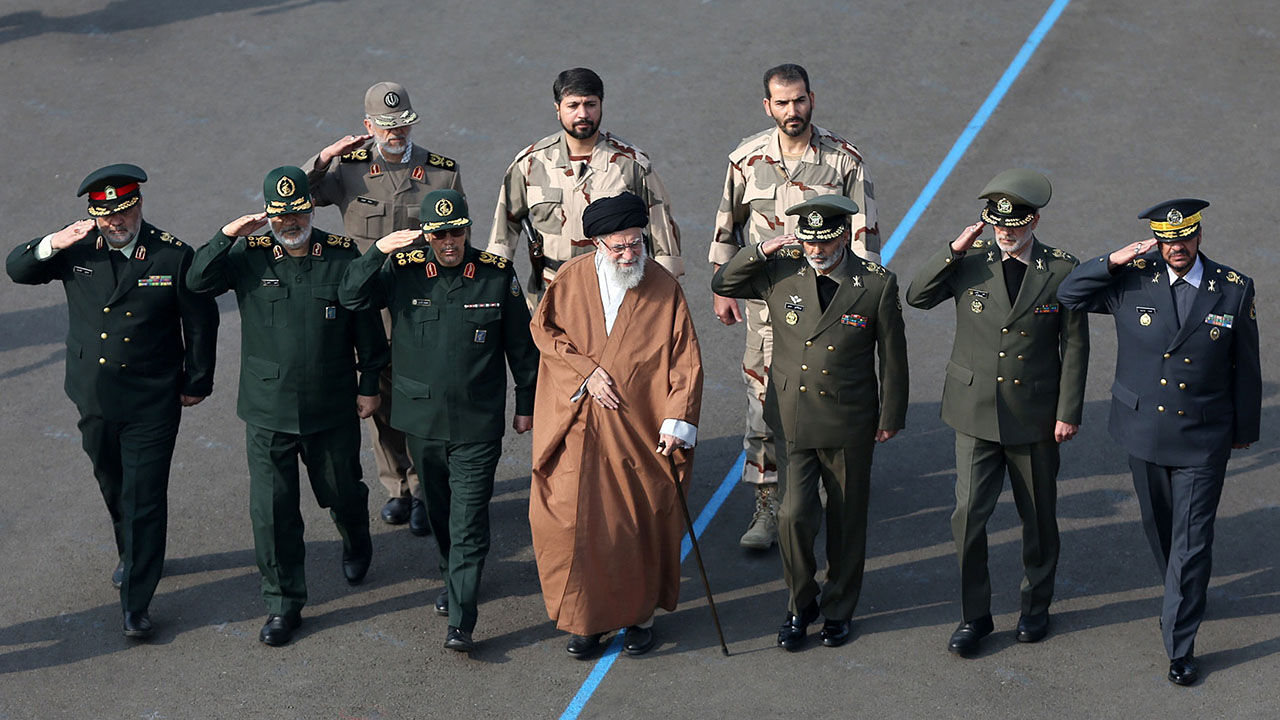
As the IRGC gains control its elite is being transformed at speed by Israel's assassinations. Gone are the veteran commanders who for years pursued "strategic patience", limiting their fire when their totemic leader, Qassem Soleimani, was assassinated in 2020, and holding it when Israel battered their proxies, Hamas and Hizbullah, in 2024. Now a new generation, impatient and more dogmatic, has taken their place and is bent on redeeming national pride. "The maximalist position has been strengthened," says an academic close to the reformist camp. He claims the decision-makers in place before the war were debating whether to ditch their anti-Israel stance. But "everyone is now a hardliner".
Compounding the generational shift is a newfound cohesion in a military-industrial complex renowned for paranoia and scheming. A year ago the regime was rocked by infighting. Businessmen, military professionals and ideologues battled for supremacy inside the IRGC. Hardliners chased pragmatists from state institutions. Rival factions blamed each other for the death of the country's president in a mysterious helicopter crash in 2024. Now they appear to be coalescing against a common foreign enemy.
Yet in parallel the war has triggered a nationalist surge and narrowed the gap between ruler and ruled. No one has responded to calls from Binyamin Netanyahu, the Israeli prime minister, or Reza Pahlavi, the royalist pretender, for a popular uprising. Early admiration for Israel's military prowess has turned to outrage as its targets have widened and the death toll has mounted. Scorn for the IRGC's haplessness has turned to pride at the speed with which it has reconstituted. Iranians who fled the capital are coming back. Those who once championed Israel are now handing over suspected Israeli agents to the police. Female political prisoners, the mothers of executed protesters and exiled Iranian pop stars have all issued calls to rally to Iran's defence. "It's backfired on Bibi," says a former official turned dissident, using the nickname of Mr Netanyahu.
Iran’s supreme leader, Ayatollah Ali Khamenei, is 86, and for years there has been speculation about succession, although who might gain the upper hand has been far from clear. The war is changing that, turbo-charging a power shift to the regime’s military arm, the Islamic Revolutionary Guard Corps (IRGC). In the first days of the fighting Mr Khamenei, ageing and isolated for his own safety, disappeared from the scene like the Shias’ hidden Imam. He delegated decision-making to a new council, or shura, dominated by the IRGC. “The country is in effect under martial law,” says an observer.
A growing caucus advocates dashing for a bomb. In the run-up to the American attack, Iran removed stockpiles of enriched uranium, and perhaps centrifuges from the targeted sites, claims an insider. Satellite imagery from June 20th shows a queue of trucks at Fordow's gate. Some are suggesting detonating a nuclear device to prove Iran's capability. Others advocate dropping a warhead coated in weapons-grade uranium on Tel Aviv. "Sure as anything they will be going for a nuke. It's absolutely disastrous," laments a Gulf mediator.
The shift from religious to military authority has some advantages. Ayatollah Ruhollah Khomeini, the original leader of Iran's revolution, warned against allowing the IRGC into politics, fearful they might dispense with his theocracy. With the clerics confined to their seminaries, there might be an easing of the regime's religious strictures. In recent days state television has shown women with hair poking out from their headscarves. But the prospect of Iran being ruled by its new shura indefinitely has other consequences, not least an even more militarised state hellbent on defiance and reprisals, and more ruthless in tamping down internal dissent. The outside world has often assumed that Iran's regime exhibits reckless risk-taking and belligerence because it has been run by religious men. The danger is the military men are worse.


 )
)