Conflict tussen Israël - Palestina en omliggende gebieden

Ik vond het ook een beetje naïef om te denken dat het een goed idee is om zo'n mars in Egypte te organiseren. Wat moeten die hebben gezopen om daarmee op de proppen te komen?

Ergens één of ander oud testament gelezen en gedacht "Wat die kunnen, kunnen wij ook"?
 

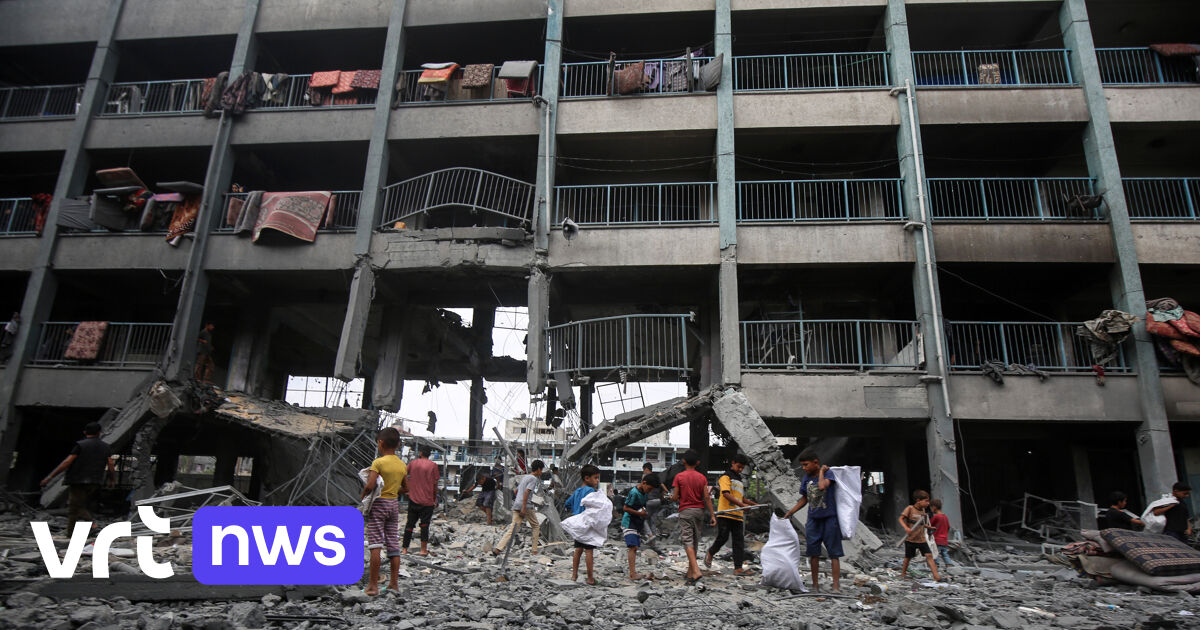
Officieren en soldaten van het IDF getuigen dat ze het bevel kregen om te schieten op ongewapende mensenmassa's in de buurt van voedseldistributieplaatsen in Gaza, zelfs als er geen dreiging was. Intussen zijn er zo ca. 500 doden en 4000 gewonden gevallen.

Israeli soldiers in Gaza told Haaretz that the army has deliberately fired at Palestinians near aid distribution sites over the past month.

Conversations with officers and soldiers reveal that commanders ordered troops to shoot at crowds to drive them away or disperse them, even though it was clear they posed no threat. One soldier described the situation as a total breakdown of the Israel Defense Forces' ethical codes in Gaza.
The Gaza Humanitarian Foundation (GHF) aid centers began operating in the Strip at the end of May. The circumstances of the foundation's establishment and its funding are murky: it is known to have been set up by Israel in coordination with U.S. evangelicals and private security contractors. Its current CEO is an evangelical leader close to U.S. President Donald Trump and Israeli Prime Minister Benjamin Netanyahu.
The distribution centers typically open for just one hour each morning. According to officers and soldiers who served in their areas, the IDF fires at people who arrive before opening hours to prevent them from approaching, or again after the centers close, to disperse them. Since some of the shooting incidents occurred at night – ahead of the opening – it's possible that some civilians couldn't see the boundaries of the designated area.

"It's a killing field," one soldier said. "Where I was stationed, between one and five people were killed every day. They're treated like a hostile force – no crowd-control measures, no tear gas – just live fire with everything imaginable: heavy machine guns, grenade launchers, mortars. Then, once the center opens, the shooting stops, and they know they can approach. Our form of communication is gunfire."
The soldier added, "We open fire early in the morning if someone tries to get in line from a few hundred meters away, and sometimes we just charge at them from close range. But there's no danger to the forces." According to him, "I'm not aware of a single instance of return fire. There's no enemy, no weapons." He also said the activity in his area of service is referred to as Operation Salted Fish – the name of the Israeli version of the children's game "Red light, green light". "

Gaza doesn't interest anyone anymore," said a reservist who completed another round of duty in the northern Strip this week. "It's become a place with its own set of rules. The loss of human life means nothing. It's not even an 'unfortunate incident,' like they used to say."
"At night, we open fire to signal to the population that this is a combat zone and they mustn't come near," the officer said. "Once," he recounted, "the mortars stopped firing, and we saw people starting to approach. So we resumed fire to make it clear they weren't allowed to. In the end, one of the shells landed on a group of people."
"Today, any private contractor working in Gaza with engineering equipment receives 5,000 [roughly $1,500] shekels for every house they demolish," said a veteran fighter. "They're making a fortune. From their perspective, any moment where they don't demolish houses is a loss of money, and the forces have to secure their work. The contractors, who act like a kind of sheriff, demolish wherever they want along the entire front."

As a result, the fighter added, the contractors' demolition campaign brings them, along with their relatively small security details, close to distribution points or along the routes used by aid trucks.

In order [for the contractors] to protect themselves, a shooting incident breaks out, and people are killed," he said. "These are areas where Palestinians are allowed to be – we're the ones who moved closer and decided [they] endangered us. So, for a contractor to make another 5,000 shekels and take down a house, it's deemed acceptable to kill people who are only looking for food."
A senior officer whose name repeatedly comes up in testimonies about the shootings near aid sites is Brigadier General Yehuda Vach, commander of the IDF's Division 252. Haaretz previously reported how Vach turned the Netzarim corridor into a deadly route, endangered soldiers on the ground, and was suspected of ordering the destruction of a hospital in Gaza without authorization.

Now, an officer in the division says Vach decided to disperse gatherings of Palestinians waiting for UN aid trucks by opening fire. "This is Vach's policy," the officer said, "but many of the commanders and soldiers accepted it without question. [The Palestinians] are not supposed to be there, so the idea is to make sure they clear out, even if they're just there for food."
In one incident, the soldier was instructed to fire a shell toward a crowd gathered near the coastline. "Technically, it's supposed to be warning fire – either to push people back or stop them from advancing," he said. "But lately, firing shells has just become standard practice. Every time we fire, there are casualties and deaths, and when someone asks why a shell is necessary, there's never a good answer. Sometimes, merely asking the question annoys the commanders."

The soldier said this has become routine. "You know it's not right. You feel it's not right – that the commanders here are taking the law into their own hands. But Gaza is a parallel universe. You move on quickly. The truth is, most people don't even stop to think about it."
 
Als die bevelen van hogerhand komen spreken we van structurele oorlogsmisdaden, waarbij oorlogsmisdaden niet enkel worden gedoogd maar ook aangemoedigd en zelfs bevolen.
 

We geven toe dat we misdaden tegen de mensheid begaan. k thx bye.

En blijkbaar beginnen de illegale kolonisten het IDF aan te vallen? Wat een vreemde wending.
BG’er die totaal niet weet wat zionisme inhoudt en zich nooit meer liet horen zei:
Maar wat voor onwijs grote onzin kraam je nu uit?
Zionisme is in de basis het idee dat joden vrij en veilig kunnen leven, en dit het beste kunnen doen in een staat waar ze dit vrij en open kunnen doen.
Net zoals alle voorbije gebeurtenissen voorbije maanden / jaren, zal hier toch niets mee gedaan worden vrees ik, want... Israël.
Jesus, ik wou dat ik hun privileges had.
 

Meest morele democratie ter wereld mensen. Hoe gaan we dit weer trachten goed te praten?
Los van het lijden op het terrein, is mijn eerste gedachte als outsider:
Hoe lang voor het VK en de EU beslissen om die mensen op te vangen?
En Israel lacht zich een bult, alles verloopt perfect volgens plan.

Ik hoop dat ik verkeerd ben, maar het ziet er niet goed uit.


Los van het lijden op het terrein, is mijn eerste gedachte als outsider:
Hoe lang voor het VK en de EU beslissen om die mensen op te vangen?
En Israel lacht zich een bult, alles verloopt perfect volgens plan.

Ik hoop dat ik verkeerd ben, maar het ziet er niet goed uit.


Oh boy, Gaza moet inderdaad geholpen worden op humanitair vlak. Maar ze als vluchtelingen binnen halen is enkel maar om problemen vragen.

Zal boordevol geradicaliseerden zitten die ons even veel haten als Israël.
 
Los van het lijden op het terrein, is mijn eerste gedachte als outsider:
Hoe lang voor het VK en de EU beslissen om die mensen op te vangen?
En Israel lacht zich een bult, alles verloopt perfect volgens plan.

Ik hoop dat ik verkeerd ben, maar het ziet er niet goed uit.


Die eerste tweet gaat over 'families of British Palestinians', dus familie van Gazanen met een dubbele nationaliteit. Dat lijkt me niet meer dan normaal dat je dat bekijkt.
Die tweede heeft dus zelf familie die in Gaza zit.

Ik geloof toch echt niet dat er in Europa genoeg draagkracht is om de hele Gazaanse bevolking op te vangen. Wir schaffen das is verleden tijd.
 
Best wel opvallend, gezien zo veel mensen ooit op hun paard zaten omdat het racisme in het behandelen van oorlogsvluchtelingen aan de kaak werd gesteld bij de Oekraïense golf van vluchtelingen. Toen werd het afgezet tegen de Syrische vluchtelingen. Een paar jaar later gebeurt exact hetzelfde.

Het zijn oorlogsvluchtelingen, hè. Slachtoffers van misdaden tegen de mensheid, die niet liever willen dan terugkeren. Hoelang voor het VK en de EU beslissen om oorlogsvluchtelingen op te vangen? Zeg je hetzelfde van de Israëli hier?
 
Er zijn waarschijnlijk goede redenen waarom de rondomliggende landen, die overwegend islamitisch zijn, de Gazanen niet willen opvangen?
 
Er zijn waarschijnlijk goede redenen waarom de rondomliggende landen, die overwegend islamitisch zijn, de Gazanen niet willen opvangen?
Landen zoals Egypte hebben ze in het verleden al grote hoeveelheden geld aangeboden (tot 14 miljard EUR). Dat is heel veel geld voor een (relatief) arm land met een zwakke economie zoals Egypte, maar ze moeten de afweging v/d risks en de rewards maken. Hierbij wogen de risks zwaarder door en hebben ze het geweigerd. Andere Islamtische naburige landen staan er evenmin voor open.
 
Ik heb ook oprecht nooit het argument gesnapt waarom buurlanden ze überhaupt horen op te vangen? Palestina is hun thuis(land)? Om dan ooit, in een hele verre toekomst terug te mogen keren (lees: nooit).

Het is daar nu al een apartheidsregime 🤷‍♂️ Dat gaat nooit veranderen hoor.
 
Er zijn waarschijnlijk goede redenen waarom de rondomliggende landen, die overwegend islamitisch zijn, de Gazanen niet willen opvangen?
Palestijnse vluchtelingen zijn daar al een paar keer slechts nieuws geweest. Jordanië heeft ze opgevangen (uit eigenbelang, hun idee was dat als de Palestijnen in Jordanië gingen leven, ze Palestina bij Jordanië gingen kunnen voegen, er was toen nog niet zo'n duidelijk Palestijns nationalistisch idee) maar da's helemaal fout gelopen en uitgedraaid op een halve burgeroorlog met Palestijnen die kwaad waren dat Jordanië Israël niet militair aanviel. Die vluchtelingen die in Jordanië zaten zijn dan verspreid geraakt over de Arabische wereld en hebben dan ook in het op dat moment vrij welvarende Libanon een burgeroolog ontketent, of er toch een groot aandeel in gehad via de PLO.

In Egypte heeft de moslimbroederschap kort de macht gegrepen in de Arabische lente en Palestijnen leunen daar over het algemeen vrij dicht bij aan, het Egytisch regime heeft een realistische schrik dat Palestijnse vluchtelingen opvangen hun machtspositie op het spel zet. Gaza is 20 jaar lang ook bezet geweest door Egypte, totdat Israël het veroverd heeft, beetje met hetzelfde idee als Jordanië. Die bezetting was vrij vijandig en Egypte was af en toe slachtoffer van aanslagen door Palestijnse organisaties.

De buurlanden zijn allemaal dictatoriale regimes. Zelfs als er vanuit de lokale bevolking sympathie is voor de Palestijnen is hen al dan niet helpen een koude politieke berekening die gezien de geschiedenis meestal als negatief ingeschat wordt. Veel verder dan wat PR operaties gaan die regimes niet.
 
Laatst bewerkt:
Terug
Bovenaan