Judas

Goldrusher

Crew Member
Platinum Trophy
judas.png


release: TBA
genre: action-adventure, shooter
dev: Ghost Story Games

Van de bedenker van BioShock, nu op een ruimteschip.

A disintegrating starship. A desperate escape plan.

You are the mysterious and troubled Judas. Your only hope for survival is to make or break alliances with your worst enemies. Will you work together to fix what you broke—or will you leave it to burn?

 
Laatst bewerkt:
Heh "Judas".. ben eens benieuwd.

Zal dat Polygon interview met Levine nooit vergeten. "Bioshock is a game about Jews"

Ik had dat na een 3e keer uitspelen eigenlijk nog altijd niet door :unsure:
 
Meer dan een jaar geleden dat we deze nog eens te zien kregen.

The “Who is Judas” trailer offers a deeper look at the game’s setting aboard the Mayflower, a spacefaring city whose citizens are trained to tear each other apart for even the most minor infractions, and where machines control every aspect of business, art, and government. You, as Judas, are the driver of every event in a mysterious story with a new cast of characters to get to know—and to change—in a world where every decision you make affects how the story unfolds.

The leaders tried to turn you into something you’re not: a model citizen.

And you sparked a devastating revolution to tear it all down.

Will you fix what you broke, or leave it all to burn?

 
Uhu. Maar langs ene kant niet slecht dat het onder een andere naam komt. Dempt die verwachtingen en zijn er niet een hoop fans butthurt dat het niet onderwater of in de lucht is te doen.
 
Nieuwe beelden en interviews, alsook de eerste hands-on impressies.


Laatst bewerkt:
Goed interview over game development, met in het bijzonder de keuzes die je hebt in een game:


BioShock and BioShock Infinite, if you look at them from a development standpoint – and this may be a bit alienating to some readers – but they're basically a corridor. A very, very long corridor with a bunch of trigger points that make story elements happen. Judas is made very, very differently and that makes it much more hopefully reflective of players agency, but also much, much harder to make.
One of the reasons Judas is taking so long is trying to figure out how we get the game to be substantially more responsive to player decisions. That's a really hard problem, and that's why you don't see a ton of it [in games].
It's really funny because we're making this game where the ship is falling apart and you've got to get off. So we think about it all the time because anything you're going to be doing, if it's not about getting off the ship, the big question that will come up is 'Why am I doing this?' and you [risk] the player losing faith in the story you're telling. You have to respect all that stuff.
There are beats and how you got there is going to be fairly different from one player to the next. And places you'll get to are very different from one player to the next.

Er is volgens Ken ook nooit een goed of slecht einde, maar gewoon jouw einde.

At the end of the day though, I kind of feel that there is no 'canon'. I don't really believe in authorial intent, because one day I'm going to be dead and if I'm lucky enough that people are still interested [in my games] when I'm gone, they're not going to be able to ask what I think.

I really try not to overly insert myself into that decision because it doesn't matter. The user's experience of the art is central, not the artist's experience of the art. Art is the intersection of the art and the person viewing the art. It's different for every painting, every song, every book, every game. If you read a book when you're young and then you read again when you're old, that's a different book, right? And that's beautiful, man. I never want to take that away from you.

People often ask me about the end of BioShock Infinite, what was happening there? Did this happen or did that happen? Maybe I'm just being a douche bag for not answering it, but I kind of feel the answer is, 'Well, what do you think of this?' That's the beauty of what we do. There's no medium that's more user-involved than our medium.

We mogen trouwens ook GTA / Rockstar bedanken voor het budget van deze game:

I'm very fortunate that Take-Two put their faith in me and not everybody has the wherewithal to do that – especially in the last few years, which have been very challenging. Take-Two has had success and I'm very grateful to everybody else who's done well – like, obviously, the Rockstar guys, who bring in a lot of revenue and who allow this kind of experimentation – because ideally you want to be putting bets on people taking risks in any sort of endeavor.
 
Nog eens wat nieuwe info.

Afhankelijk van je acties, staan de hoofdpersonages aan jouw kant, of worden ze je vijanden.

In BioShock Infinite, there was a lot of energy invested into developing your relationship with Elizabeth. By the end of the game, you knew everything about her, her abilities, her hopes and dreams. But the truth is she knew almost nothing about you, the gamer playing Booker. In Judas, the Big 3 observe you as you play, and they have feelings not only about how you approach combat, hacking, and crafting, but most importantly your interactions with the other two characters.

When you play BioShock or BioShock Infinite, the villain is always going to be the villain. Fontaine, Comstock — they’re always going to be the bad guys. In Judas, your actions will attract members of the Big 3 to you as friends. But ignore one of them enough, and they become the VILLAIN. From there, they will get access to a new suite of powers to subvert your actions and goals.

zg0cbtN.gif


5ijaiVi.gif


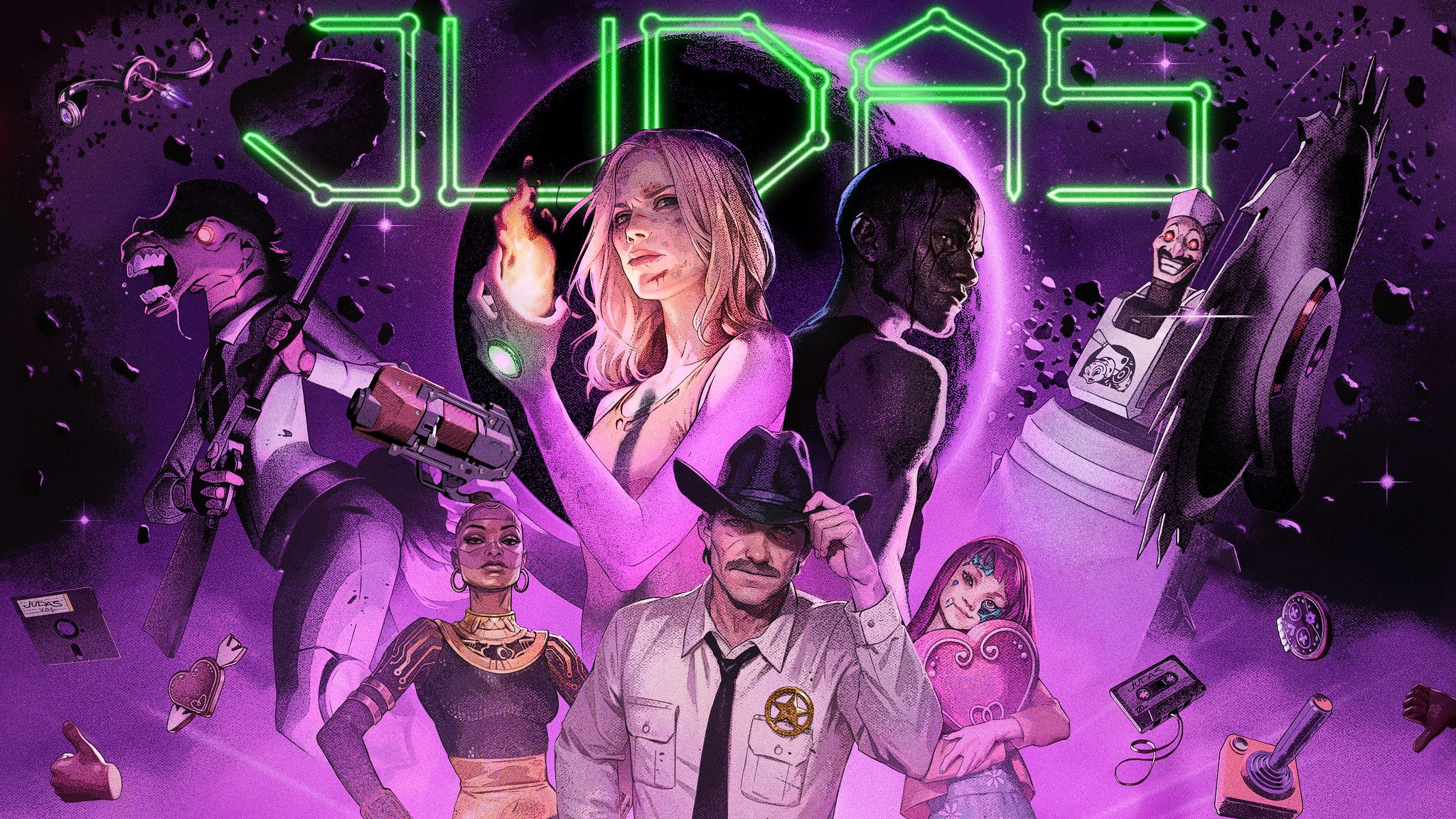
En ook nieuwe key art:

We’re really happy to finally show this off. I have always personally been a huge fan of Drew Struzan’s work and that era of movie posters. The style is great at presenting films that have a big cast, like Star Wars. And Judas has a big cast. Outside of the lead roles, there’s likely going to be more than one hundred speaking parts… If you look closely, there’s probably some details you might be curious about. Let’s just say there’s some stuff in this game that we’re not going to talk about right now, but everything here is relevant.

a7493915243d51ddfa9d4787493636a8daa6435c.jpg


Nieuwe dev log, nu vooral over het gelijknamige hoofdpersonage:

“Judas,” as she came to be known, understands machines in a way she can never understand people. That became her greatest strength... and greatest weakness. We put her in a science fiction world, a colony ship filled with robots — a futuristic setting that makes someone like her extremely powerful. But it’s also a world where personal success hinges on how well you can conform to the rules, because dissent would lead to the failure of the mission. That makes her an outlaw, a pariah — a Judas. That tension at the heart of the character came to inform everything about the game, which we stopped thinking of as an FPS and started calling a “Judas Simulator.” Everything comes back to that core idea of you interacting with the world as Judas.

Where I think Judas differs the most from BioShock or BioShock Infinite is right there in the name. The game is named after her. Booker and Jack were strangers in a strange land, just like the player. Judas is a native of the Mayflower. In fact, she’s at the center of the events that set the story in motion. She’s got history with this world and the people in it — most of it very, very bad. Her story is about so much more than getting off a sinking ship, and it gives the player so many ways to determine how her journey plays out.

En over het ruimteschip de Mayflower:

We want to communicate this world as best we can, not only through lore, but visually. A unique challenge in creating our colony ship setting, is that it’s a much older space to craft for player exploration. Rapture and Columbia existed as they were from their foundings. But the Mayflower is decades into its voyage, and it’s changed immensely since its departure.

Like with any city with significant history, if you start digging up the street, you would find layers of the city's past.  Older eras of street long buried, forgotten, and built over by the roads upon which you now walk.  With the Mayflower as a generational starship, we want to imbue this world with the same sense of time, history, and credibility; this is a civilization that went through eras of conflict and rebirth. And having the characters and the architecture of the world reflect those layers of the onion is a powerful mechanism for visual storytelling. This allows players to act as a sort of historian and architect as they explore the Mayflower. Through uncovering more, you’ll make increasingly informed decisions with the story and characters on your journey.


Meer:

 
Terug
Bovenaan